Canal boat art. Roses and castles.
Traditional canal boat art has a name — roses and castles — and a history that runs the length of the British canal network. Here's where it came from, what the motifs mean, and how the tradition carries into the canal boat art people buy today.
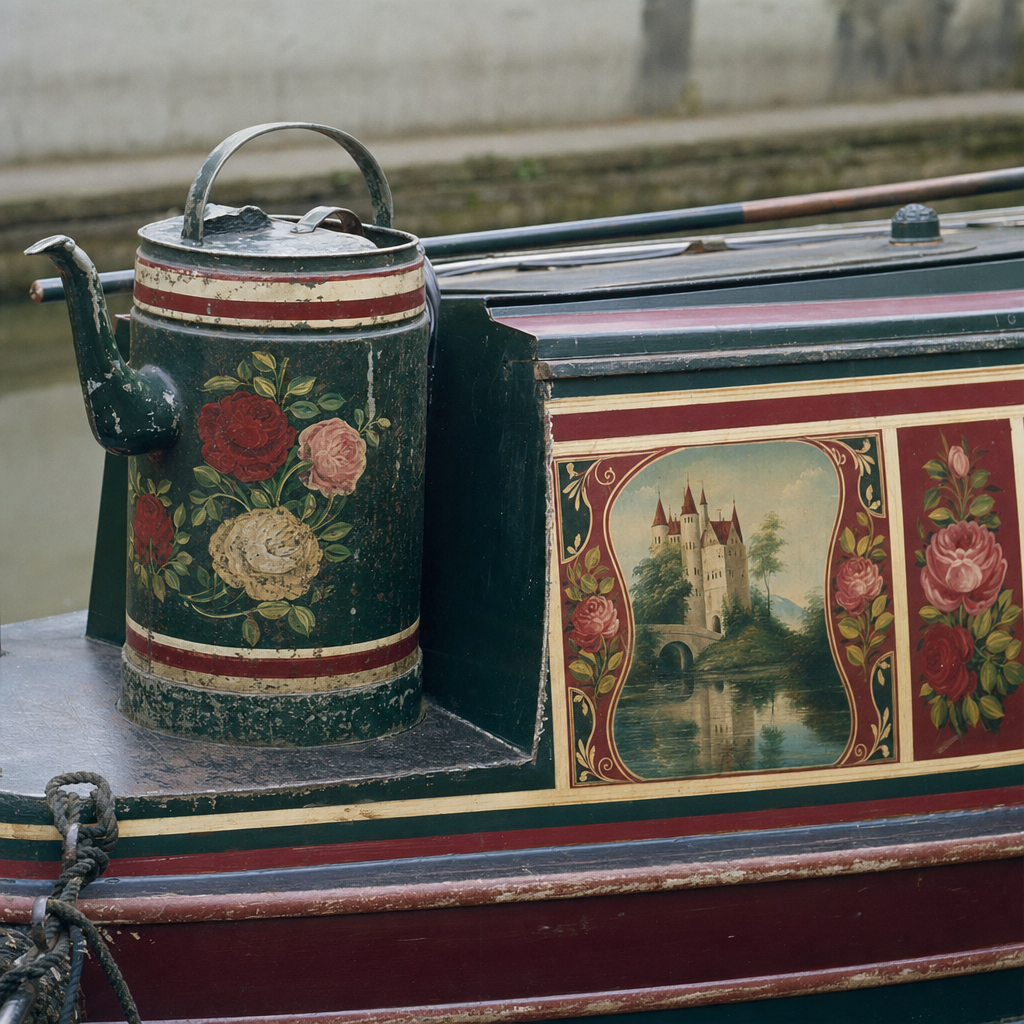
What "roses and castles" means
The folk art painted on Britain's working narrowboats is known as roses and castles, after its two most common motifs: tight bunches of bright roses and small, romantic, fairy-tale castles. You'll find it on cabin doors and panels, on the tiller, and — most famously — on the Buckby can, the painted water can that sat on the cabin roof. It's the single most recognisable form of canal boat art, and the reason "canal art" reads as a distinct visual tradition rather than just decoration.
Where the tradition came from
The style took hold from the mid-19th century, as the railways pulled the freight trade away from the canals and boating families moved fully aboard. A working cabin was tiny and dark; the painting brightened it, and it became a mark of pride and identity — each boat and each family carrying its own hand. No single inventor is recorded, which is part of the appeal: roses and castles is genuinely folk art, passed boat to boat and painter to painter rather than taught from a book.
The full story — the Buckby can, the painters, the palette — is in our history of roses and castles. That lineage matters when you're buying canal boat art today. The tradition was never about a generic canal scene — it was about a specific boat, painted by a specific hand, carrying a specific family's identity. The boat's name and its livery did the same job a coat of arms does. That's the thread worth keeping.
The working-boat palette
Traditional narrowboat art sits on a strict palette: dark grounds — deep bottle green, oxblood red and black — with the roses themselves picked out in bright reds, pinks, yellows and white over the top. The restraint is deliberate — a small number of hard-wearing enamel colours, applied so they'd survive a working life on the cut. It's why canal art still looks coherent across two centuries of boats: the palette barely moved.
Canal boat art today — and the personalised print
You can still buy hand-painted roses and castles at canal festivals and from a handful of specialist narrowboat painters — canal boat folk art and traditional canal boat painting, roses and all, are alive and well — and if you want the genuine folk article that's where to go. What we make is the modern counterpart: not floral painting, but the boat's actual name set in editorial type, in the traditional green-and-oxblood spirit on cream archival paper. It reads as canal art at a glance, but it's specific to one boat — the same instinct roses and castles always served. If you're searching for canal boat artwork to hang rather than a painted panel for the boat itself, this is the version that works on a wall.
The personalised name print (from £19) is the everyday version; the canvas (from £45) gives it the gallery-wrapped, glass-free finish that reads most like a painted panel on a cabin wall. If you want a one-off artwork rather than the typographic piece, the boat portrait renders the boat itself as a watercolour or ink study.
Browse the full range on the canal boat gifts page, or if you're buying for the owner specifically, gifts for canal boat owners.
The kinds of canal boat art you'll find
"Canal boat art" covers three quite different things, and it helps to know which one you're actually after before you start looking. They aren't competing — they sit at different points on the line between decoration and likeness.
- Hand-painted roses and castles ware. The folk tradition itself — roses and small castles painted in enamel on a dark ground. It lives on objects: Buckby cans, dippers, stools, hooks, the odd cabin panel. It's decorative, not representational. It says "narrowboat" without depicting any boat in particular. Bought from a working painter, a good piece is a small heirloom.
- Original boat portraits and paintings. A likeness of one specific vessel — your boat, moored or under way — in watercolour, ink or oil. This is the representational end. The skill is in catching the lines of the hull and the light on the water, and a commissioned painting can take weeks. Our boat portrait renders the same idea as a watercolour or ink study from your photos.
- Typographic name prints. The newest form, and what we mostly make. No roses, no scene — the boat's name set in editorial type, in the green-and-oxblood spirit of the tradition. It reads as canal art at a glance and is specific to one boat, which is exactly what roses and castles did for a working family.
Roughly: ware decorates, a portrait depicts, a name print declares. Most people who say they want "canal boat art" want one of the last two for a wall, and a painted Buckby can for the boat.
Commissioning a piece
If you want a genuine hand-painted item or an original portrait, you're commissioning a craftsperson, not ordering off a shelf — so approach it like a craft. A good painter is often booked weeks ahead, especially around the festival season, and rushing the brief is how you end up disappointed. A few things worth settling before any money changes hands:
- What, exactly. A painted object, a panel for the boat, or a framed picture for a wall? They're different jobs and different prices.
- Reference. For a portrait, send good photos — side-on, in decent light, both ends of the boat. The painter can only paint what they can see.
- Lead time. Ask plainly when it'll be ready. Hand work takes as long as it takes; a fortnight is fast, two months isn't unusual.
- Palette. If you want it to sit in the tradition, say so — bottle green, oxblood, black. Some painters will gently modernise unless you ask.
- Surface. Going on the boat, or on a wall at home? Enamel on a panel and watercolour on paper want very different care.
None of this applies to a print, of course — that's the trade-off. A commission is a one-off made by a person; a print is repeatable, quicker and cheaper. Both are honest answers, and the right one depends on whether you're buying the object or the artwork.
Choosing art for a small cabin
A narrowboat cabin is about as unforgiving a hanging space as there is — narrow, low, and lined in steel that sweats. Scale comes first. A big statement piece that works over a sofa at home will swamp a cabin and block a walkway; smaller, and more than one, usually reads better in a long thin space. Hang at seated eye level, not standing — you spend most of your time aboard sitting down.
Then weight and glass. A glazed, framed print is heavy and the glass is a liability on a moving boat — it rattles, it can crack, and condensation forms on the inside of it. A canvas (from £45) sidesteps all of that: no glass, lighter, and it reads most like a painted panel on a cabin wall. If you do want the paper version, the name print (from £19) or a framed print (from £39) is best kept somewhere drier and more settled — a static mooring, or the home of someone who loves the boat rather than the boat itself.
Caring for it aboard
The two things that age art on a boat are damp and the stove. Damp is slow — condensation behind a frame, a canvas pressed flat against a cold cabin side with no air behind it. Leave a small gap so air can move, and don't hang anything on the coldest, most exposed panel. The stove is the faster problem: direct heat dries and cracks, and soot quietly films everything above it over a winter. Don't hang a piece you care about over or beside the fire.
Beyond that it's easy. Dust a canvas with a dry, soft cloth — never a damp one. Keep painted ware out of direct sun so the colours hold. And if you're between boats or storing over winter, stand pieces upright in a dry spot rather than flat, where damp settles. Treated sensibly, both a painted Buckby can and a name print will outlast several engines.