In short. Signwriters price by the job, and no one publishes a price list, so the honest answer is that you get a quote. What you can know in advance is what moves the number: name length, shading and outlining, gold leaf, scrollwork, and how much preparation the cabin side needs. Remember a boat usually wants both sides plus the stern, so the real job is two to three times whatever a per-side figure sounds like. Self-apply vinyl is far cheaper, but it isn't signwriting. A printed name sign for the wall is a fraction of either, but it's a different thing.
Why we won't quote you a number
One number the Trust does publish is for the index number the signwriter letters beside the name. If the boat is still being built and you want it lettered before the first licence, "you can apply for just an index number. The cost of this 'Early Registration' is £20" (the Trust's boat licensing FAQs), and displaying the licence discs "along with your boat name and index number" is a legal requirement.
Signwriters price by the job, not from a menu, and no trade body publishes a rate. We had figures here and have taken them down: they came from nowhere we could point at, and a made-up number is worse than no number when you are about to ring a craftsperson. A longer name, full outlining and shading, or a more elaborate hand all push the price up; gold or metallic leaf, scrollwork, or a painted panel framing the name push it up again. A painted panel is roses-and-castles work rather than lettering, and painters price it as a separate job. Because the name goes on both cabin sides and the stern, the real-world total is usually two to three times the per-side figure. (Self-apply vinyl lettering is a much cheaper, non-painted alternative, but it isn't signwriting.)
What pushes the price up
- Name length. More letters, more time: and more careful optical spacing.
- Shading & outlining. The hard drop-shadow and contrasting outline that make the name read from the bank are extra passes.
- Gold or metallic leaf. Materials and skill both cost more than flat enamel.
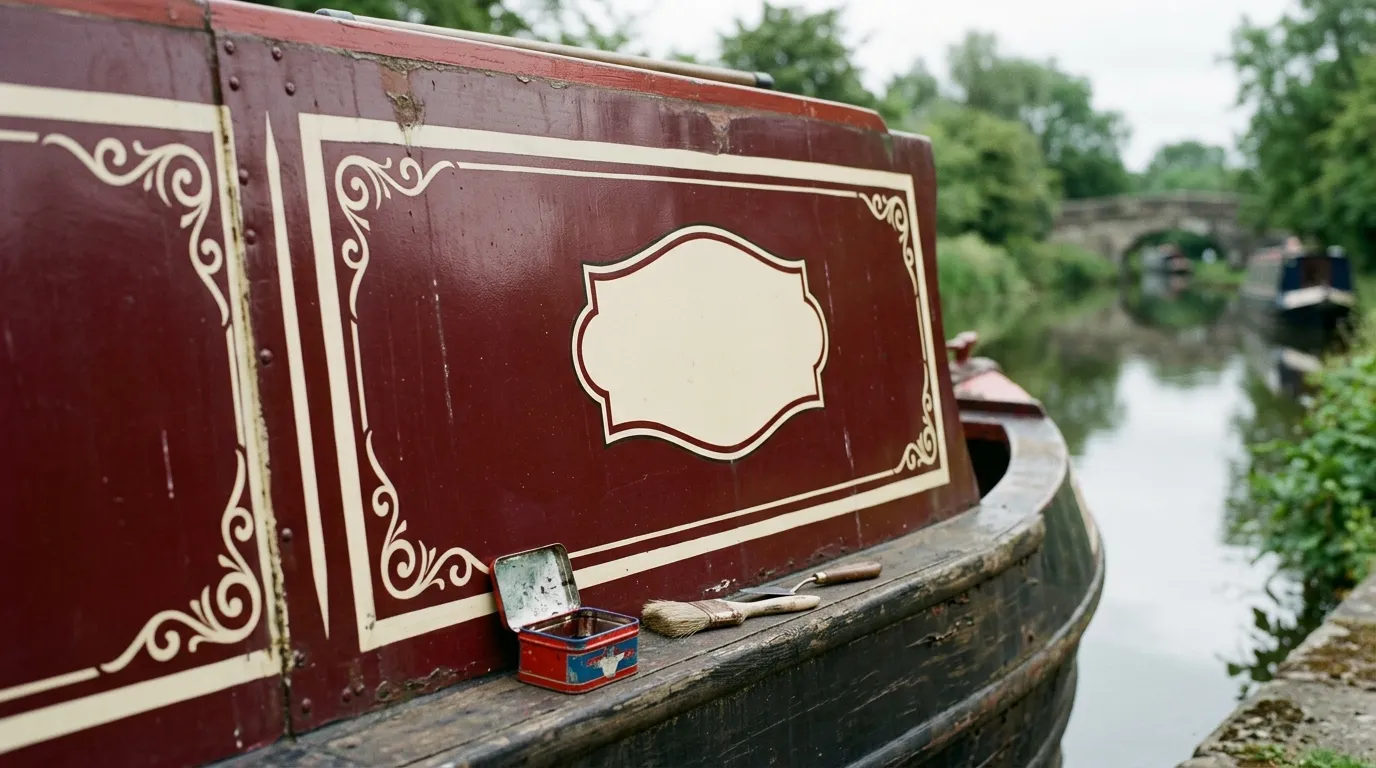
- Scrollwork & panels. Decoration around the name, into roses-and-castles territory: adds a separate job.
- Surface prep. A tired cabin side may need rubbing down or a base coat before any lettering goes on.
Getting a quote
Find a specialist canal signwriter (many work the festival circuit or out of yards along the network) and send a photo of the cabin side with the name and any decoration you want. Ask to see examples of their lettering first: the gap between competent and excellent is all in the spacing and the shadow. How the lettering tradition works is covered in our guide to canal boat signwriting.
The printed name sign: the cheaper, different option
A printed boat name sign isn't a substitute for signwriting on the hull: it's the version for the wall, or for a gift. It costs a fraction of hand-lettering and carries the same name, in the same shaded-serif tradition and bottle-green-and-oxblood palette. We make it as a name print (from £14.99), a framed print (from £69.00), or a canvas (from £51.49). Plenty of owners do both: signwriting on the boat, a print at home.
DIY vinyl vs paying a pro
Vinyl and hand-lettering aren't two prices for the same thing. They're two different things. Vinyl is cut lettering on a self-adhesive film: you order it to your name, your colours and your font, it arrives on a backing sheet, and you squeegee it onto a clean, degreased cabin side yourself. Done carefully it looks crisp from the towpath and nobody's going to wince. That's a real option, and for a first boat or a holding measure it's a sensible one.
What vinyl doesn't buy you is depth. Hand-painted lettering has a brushed enamel body, a hard cast shadow and a contrasting outline, all built up in layers: that's what reads as a proper boat name rather than a label. Vinyl is flat. It also sits on the paint rather than in it, so the edges lift and the colour fades faster than enamel does. You're trading craft and longevity for cost and speed. Know which one you're buying before you compare the numbers.
What a signwriting quote should include
A vague "from" price tells you almost nothing, because the variables do the work. A useful quote spells out exactly what's covered, so ask for it in writing and check these are all named:
- Which surfaces. Both cabin sides plus the stern is the usual minimum: confirm it's all three, not one side as a teaser price.
- Number of colours. Name, shadow and outline are often three colours; each adds passes and drying time.
- Shading & outlining. Stated explicitly, not assumed. A flat single-colour name is cheaper than a fully shaded one, make sure you're comparing like for like.
- Materials. Standard enamel, or gold/metallic leaf? Leaf is a different price bracket and should be itemised.
- Surface prep. Rubbing down, filling, base coat: say whether it's included or extra, because a tired cabin side can add a chunk.
- Travel. Many signwriters come to the boat where it's moored. Mileage or a call-out fee may sit on top of the lettering price.
Get two or three quotes on the same brief and the real cost stops being a mystery. The cheapest one is rarely cheapest once you line up what each actually includes.
Longevity & touch-ups
Signwriting isn't a one-off spend, it's a thing you maintain. Enamel lettering on a south-facing cabin side takes years of UV and weather, and the colours soften over time. Reds and the gilt-look golds tend to go first; a deep green or black holds longer. Most owners get a good few seasons before a name wants freshening, and a competent signwriter can touch in a faded shadow or re-cut an outline without redoing the whole thing.
The bigger event is blacking. When the hull comes out and the cabin sides get repainted, lettering near the gunwale often has to come off and go back on: budget for re-doing the name as part of a repaint, not as a surprise. This is where a cheap job costs more long-term: thin enamel or badly-prepped vinyl fails sooner, so you pay again in two years instead of five. A properly prepped, properly painted name is dearer up front and works out cheaper across the life of the boat.
Written by Craig Fearn, Narrowboat Gifts. Last updated .