Blacking is maintenance rather than decoration: a bituminous coating applied to the steel hull below the waterline to slow corrosion, redone periodically whenever the boat comes out of the water for survey or repair. It's black because the coating is, not by aesthetic choice: and keeping up with it is a large part of what determines how long a narrowboat lasts. Above the waterline is where the character lives: the cabin sides are painted in enamel, in the traditional palette of bottle green, oxblood red, black and cream, then hand-lettered by a signwriter with the boat's name and registration number. Many boats also carry decorative panels in the roses-and-castles folk-art style, painted separately from the lettering. Repainting the cabin sides is a bigger, less frequent job than blacking, usually done when the existing paint has worn rather than on a fixed schedule. The same tradition carries onto narrowboat art prints for the wall, minus the maintenance.
Above the waterline the work splits in two, and both halves belong to making her yours. The lettering is a signwriter's job, described in signwriting on the cabin side.
Preparation decides how long it lasts.
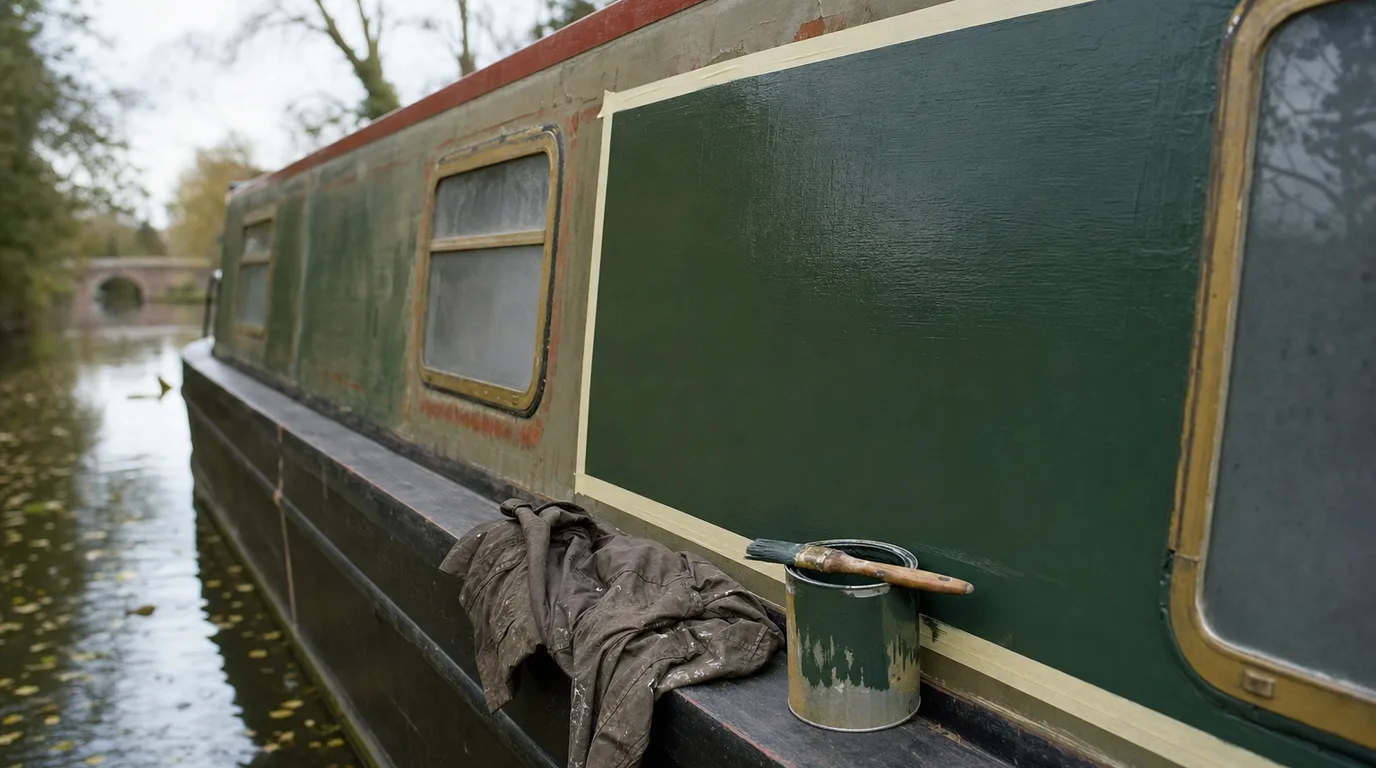
The finish is only as good as the steel underneath. A proper repaint means sanding or abrading the old coat, cutting out or treating any rust, filling dents, then building up primer, undercoat and topcoat in thin layers. Painting over rust or flaking paint just hides the problem for a season, and the bubbles return, often at the roof edges, around windows and along weld seams, where water collects. Weather matters too: paint goes on best on a dry, mild day, out of strong direct sun and away from damp or dew. Some owners use traditional enamel and others choose a tougher two-pack paint, which lasts longer but is harder to apply well and harder to touch up.
Do it yourself or hire a painter.
Masking, sanding and rolling on an undercoat are jobs a patient owner can do. A flawless gloss finish, straight lines and the signwriting are better left to professionals, and many yards will quote for a full repaint with the boat out of the water. If you do decide to hire, ask what the quote covers: preparation, the number of coats, the roof and the lettering. Plan the work for the drier months and book early, because good painters have waiting lists. Decorative panels and lettering go on last, over a hard, fully dried surface. For the artwork side of the tradition, read the guide to canal boat art, which distinguishes painted ware, portraits and printed names.