There's no fixed lifespan stamped on a narrowboat. Steel hulls are the limiting factor, and how long one lasts comes down almost entirely to maintenance rather than age alone. Regular hull blacking, the periodic reapplication of a protective coating below the waterline, is the single biggest factor in slowing corrosion; a boat surveyed and blacked on schedule can remain sound for decades. When a hull does start to thin, overplating, welding a new layer of steel over the worn section, can extend its working life considerably further, which is why old working boats, some built the best part of a century ago, are still cruising the network today. A boat's actual condition, confirmed by survey, tells you far more than its build year. See how a narrowboat is painted for where blacking sits alongside the rest of the maintenance. Long-lived or newly built, the boat's name deserves a permanent record: see our narrowboat gifts.
A survey tells you more about a boat than the year on her plate does, which is why buying her starts with the hull and not the advert. Buying a narrowboat goes through what the surveyor measures and what the readings mean.
What shortens a hull's life.
Water that sits where it cannot be seen does most of the damage. Rust often starts inside the boat, where condensation or a leaking window collects behind the lining or under the floor, and in the gunwales and along the waterline, where paint is knocked by locks and fenders. A hull with a thick base plate and sound welds starts with more margin than a thin one, and the base plate is the part that takes the longest to show trouble. Sacrificial anodes bolted to the hull help protect the steel from corrosion, so ask when they were last checked and replaced. Neglected blacking, a blocked drain or a damp bilge can each age a boat faster than the calendar does.
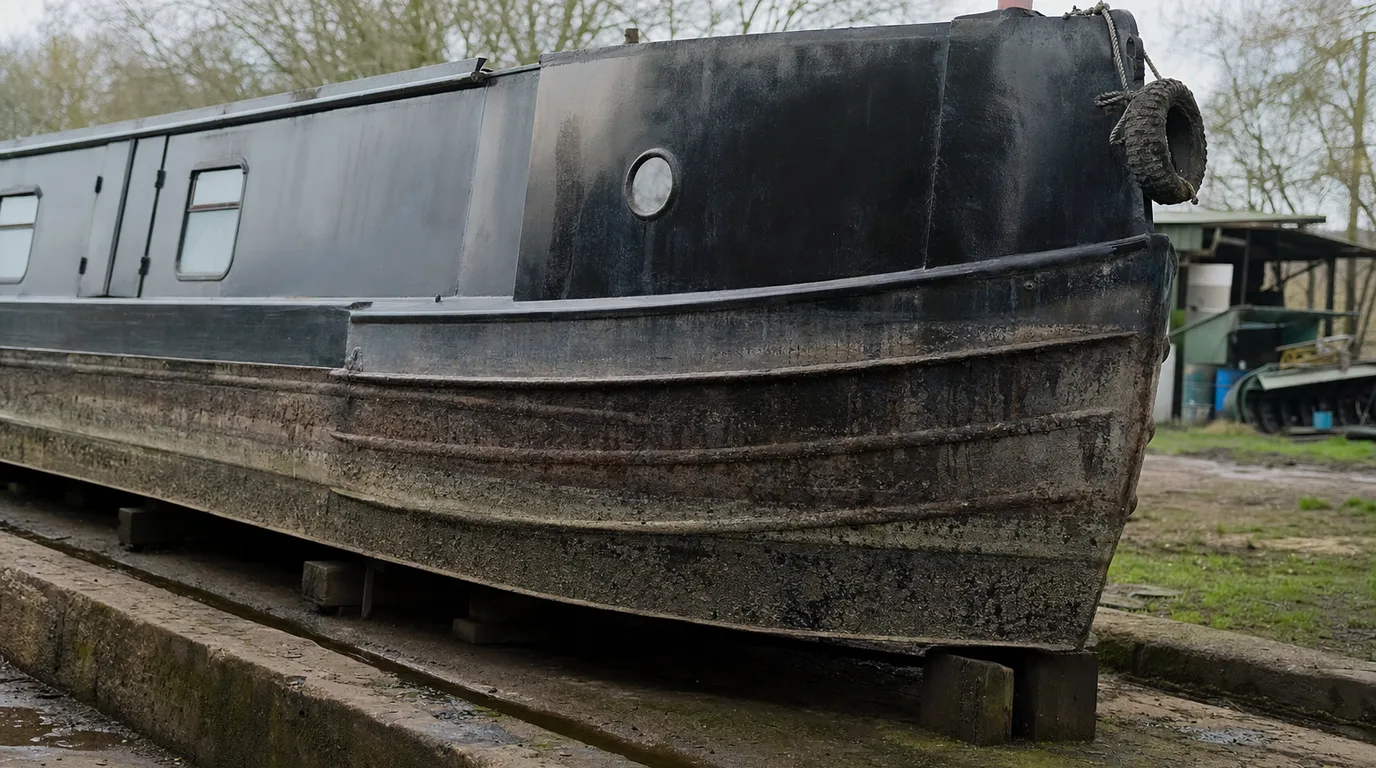
What a survey tells you about age.
A surveyor takes ultrasonic thickness readings across the hull and compares them with what the plate should measure, which turns a vague worry into a number you can act on. Thin patches can often be repaired, and the report should say how much work is likely and how soon. Other parts of the boat wear out on their own schedules: engines, gearboxes, batteries, pipework and the fit-out can all be replaced without touching the steel. So ask which parts have been renewed and when, and keep the hull separate from everything else in your thinking. For a fuller picture of what an inspection covers and what the results mean, read the guide to buying a narrowboat before you book one.