In short. Most narrowboat names fall into one of seven traditions: birds and weather lead the names you'll see most often on the cut, with one well-loved pun (Narrow Escape) breaking into the most-used list. Names are signwritten in display serif on the cabin sides and stern. The Canal & River Trust records the name as part of the boat's licence; names don't have to be unique. Pick one you'd happily introduce yourself with at a marina ten years from now.
Narrowboat or canal boat, what's the proper name?
Both are right. Use the wrong one and any boater will gently correct you, which is half the fun.
Strictly, a narrowboat is the specific kind of canal boat designed to fit Britain's narrow-gauge inland waterways: six foot ten wide, traditionally up to seventy feet long, originally built to thread through the locks of the industrial network. Most narrowboats today are pleasure craft built to those same dimensions, because the locks haven't widened.
A canal boat is the broader umbrella, anything purpose-built for the inland waterways. Wide-beams (around fourteen foot wide), short boats and dutch barges are all canal boats but not narrowboats. A longboat is what tourists and Vikings call them. Don't. A barge is a working canal boat, usually unpowered or motorised cargo craft: the term mostly survives on the broad waterways now.
For naming purposes the convention is the same across all three: a single name in display lettering, signwritten or vinyl, painted on each side of the cabin and on the stern. So whether you're after canal boat names or narrowboat names: including the funny canal boat names that boaters love, the Narrow Escape school of pun: everything below applies equally. How the name is lettered on the hull is its own craft: see our guide to canal boat signwriting.
Once the boat's named, the name is the thing worth keeping: on the cabin side, and on the wall. We make it as a personalised print, framed print or canvas: see canal boat gifts.
Why does the boat name matter?
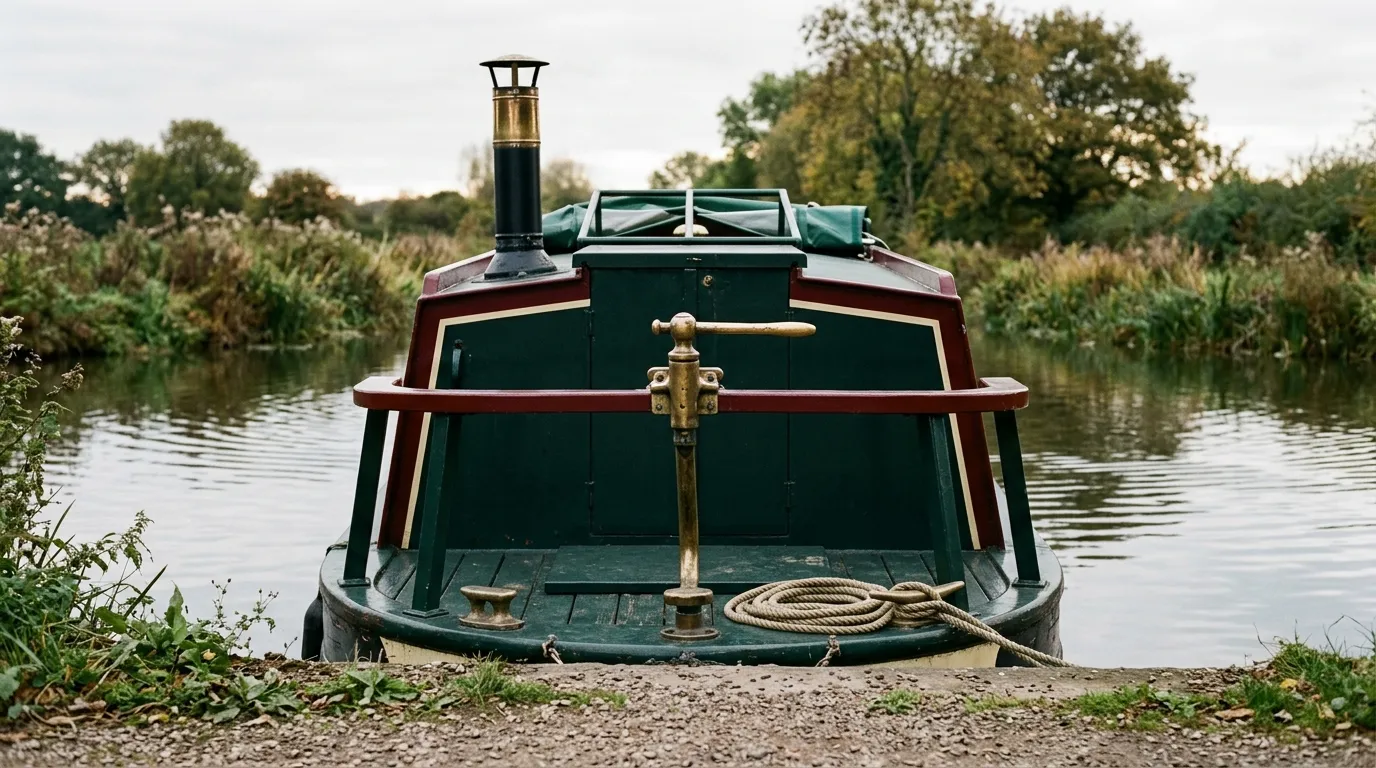
On the water, your boat's name does the work that a number plate does on a road. Other boaters greet you by it through windows. Lockkeepers announce you on the way through. It's painted on the side, called out across moorings, and (when the day comes) sold on with the boat. A good narrowboat name has to live with you.
It's also what other boaters will use to remember you by. The owner of Heron is "the bloke off Heron." The owner of Reel Therapy is "yeah, them." Names attach themselves to people on the cut faster than introductions do.
Choose carefully. Then choose anyway, because boats that wait for the perfect name don't get launched.
"There are endless ways to personalise your boat name with something significant: from song names to favourite book characters." Canal & River Trust, "What's your canal boat name?"
The names you will see most
Some names recur on the cut to the point of comedy, and the frequency argument is worth having before you settle on one. The themed list, and the names that are already everywhere within each theme, are on the big list by theme.
The seven traditions
Most narrowboats fall into one of about seven naming traditions — nature, place, people, trades, wordplay, literature, and the plainly sentimental — and none of them is wrong, though some date better than others. Each tradition is set out with examples on the big list by theme; this page is about choosing and registering one rather than browsing them.
How to name a narrowboat, step by step
If you would rather be shown options than stare at a blank page, the narrowboat name generator builds them from these same seven traditions, and you can filter by length or first letter.
- Say it out loud over a marine VHF. Anything that slurs, mumbles or sounds like another word at speed will haunt you on the radio. Ariel is heard as Aerial. Felix is heard as Helix. Try it.
- Test it at six characters and at twenty-four. Boat names live as a tiny mooring tag and as a 30cm signwritten panel on the side of a hull. Both versions need to read.
- Check it against the canal-name lookup. The searchable list is CanalPlan’s volunteer-built boat index rather than anything the Canal & River Trust publishes: the Trust records the name on the licence, but we could find no public name search of its own. CanalPlan’s index holds over a hundred thousand boats and lets you look a name up before you commit to it. Ten Herons on the system isn't a problem, but if you wanted to be the only one, you'd want to know.
- Live with it for a week. Write it on a sticky note and put it where you'll see it daily. Boat names that survive a week of mundane re-reading tend to survive forty years of ownership.
- Ask whether it'll travel. Most boaters end up on a second boat, sometimes a third. A name that follows you across boats (a family one, a place) outlasts a name tied to one hull.
- Then commit. Brief a signwriter or order vinyl, choose your hull colours (bottle green, oxblood, brass) and register the change with the navigation authority.
The naming rules nobody tells you
A few practical rules from boaters who've signwritten more than they wanted to:
- Keep it short. Signwriters charge per letter and your hull starts looking like a spam subject line beyond about twenty-five characters. The Canal & River Trust register doesn't publish a hard character cap, but the practical limit on a cabin panel is shorter than people expect.
- No special punctuation. Commas, full stops, ampersands and apostrophes paint badly and read worse. Spaces and hyphens are fine. A Salt & Battery is read as A Salt and Battery on the cut anyway, so you might as well write it that way.
- Visible from twenty metres. Cabin-side names are read by approaching boaters from a moving boat. A six-letter name in 250mm capitals is the readability sweet spot.
- Bottle green or black hulls carry letters best. White or pale hulls demand outlining; the wrong hull colour can quietly eat a name.
Roses & Castles signwriting, the canal folk-art tradition with rose-and-castle motifs framing the boat name: is a separate craft. If you're going that route, brief a signwriter early; they'll usually give the name a final once-over for legibility before painting.
How do you check if a name is taken?
The Canal & River Trust keeps a public register of every powered boat licensed on its network. You can search by name on canalrivertrust.org.uk: useful both for checking how common a candidate is, and for tracking down a boat you've spotted on the cut. CanalPlan's directory at canalplan.uk/boats/boatnames.php is the unofficial complement; it counts how many boats share each name across the system. Neither is an "official" name database (names aren't required to be unique) but together they're as close as the network gets.
A note on what actually gets painted
The internet is full of "17 funny narrowboat names" lists. Look at the names that actually recur in CanalPlan's directory, though, and the funny names are vastly outnumbered by birds, weather, virtues, and people's grandmothers. The pun-name names you'll meet (Narrow Escape, Piston Broke) are real and well-loved: but they're the minority on the cut, not the rule.
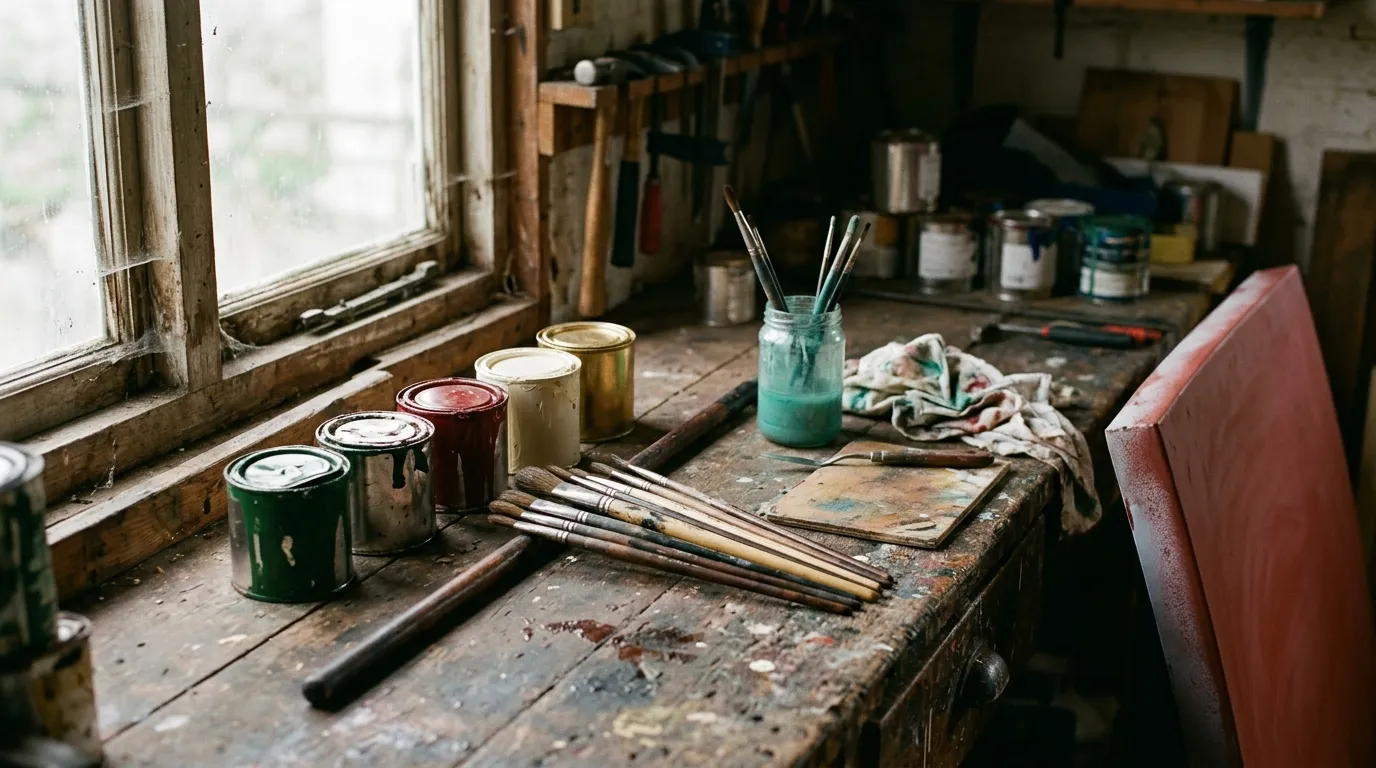
A name you live with for twenty years has to survive three things: being painted in serious lettering on a hull, being called out by strangers across moorings on the radio, and (eventually) being inherited by whoever buys the boat off you. Most boaters figure this out when they reach for the masking tape. The pun that was funny on the order form starts to feel embarrassing by the time it's three feet wide on a bottle-green hull.
Pick the name you'd want to introduce yourself with at a marina, ten years in. We typeset boat names for a living and the ones that show up most aren't the puns. They're short, plain, occasionally a grandmother.
Written by Craig Fearn, Narrowboat Gifts. Last updated .