In short. Pack soft bags not suitcases, bring more layers than the forecast suggests, and assume 12V power with no mains unless you're in a marina. Everything else on this page is the detail behind those three, learned from the boats rather than the brochure.
What to take on a canal boat holiday
Hire boats come with bedding, crockery and the obvious kit. What people forget is consistently the same short list:
- Soft bags, never hard suitcases. There is nowhere to store a rigid case. A holdall squashes flat under a bunk; a wheeled case lives in the middle of the cabin all week.
- Layers, including one more than you think. Steering is stationary work in moving air, and mornings on the water are colder than the same morning ashore. A hat matters in April and October.
- Proper waterproofs, not a fashion coat. You will work locks in rain at some point, and being wet at nine in the morning sets the tone for the day.
- Shoes with grip that you do not mind ruining. Lock beams and towpaths are wet, muddy and occasionally slick with algae.
- Gloves. Windlass work, wet ropes and cold metal. The single most-forgotten item.
- A torch or head torch. Tunnels, engine bays, and the walk back from the pub along an unlit towpath.
- 12V phone chargers. Most boats run a battery bank with USB or cigarette-lighter sockets. Mains only works on shore power in a marina, so a four-way extension is useless.
- A power bank for the same reason, if several of you are charging.
- Binoculars, and a bird book if you like that sort of thing. You travel at walking pace past herons, kingfishers and grebes.
- Cash and a card. Some village shops, honesty boxes and small pubs on remoter stretches still prefer cash.
What to leave behind: bulky sports kit, anything mains-powered, a case of wine (storage), and high expectations about phone signal in cuttings.
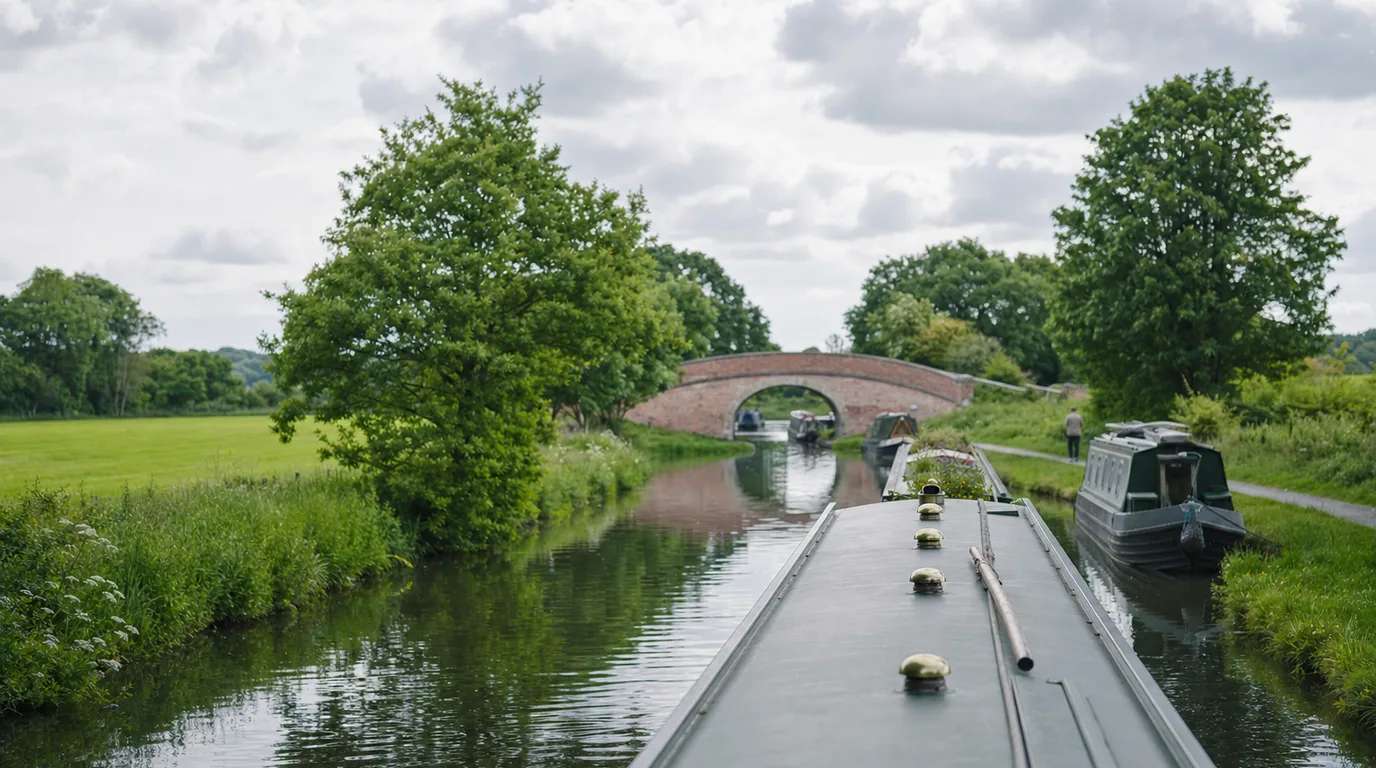
Canal boat holiday tips that change the week
- Plan half the distance you think you can do. The Inland Waterways Association reckons on three miles an hour, and ten minutes every time you drop into a lock. Six locks in an hour, then. A relaxed week means four or five hours at the tiller a day, not eight.
- Count locks, not miles. A fifteen-mile day with two locks is easy; a six-mile day with eighteen locks is a day's work. Route guides list both — read the lock count first.
- Start early, moor early. The good mooring spots near a pub or a village go by late afternoon, particularly in July and August.
- Learn the lock routine on the first one, properly. Ask the hire base to walk you through it twice — everything afterwards is a repeat of that. The Canal & River Trust's Boaters' Handbook covers the same ground in writing if you want it beforehand.
- Slow down past moored boats — properly. Drop to tickover about two boat lengths before you reach them, not as you draw level. The navigation authority's own guidance is to watch your wash rather than the speedometer: never travel with a breaking wash, which erodes banks and harms wildlife. The canal speed limit is 4mph (6mph on most rivers), but wash is the real test, and this is the single thing that separates considerate boaters from the ones who get shouted at.
- Fill the water tank whenever you pass a tap. Not when you need to.
- Check the stoppage list before you book. The navigation authority publishes planned maintenance closures; a winter or shoulder-season stoppage can close the route you booked for.
- Do not moor under trees in wind, and never on a bend or opposite a junction.
What the hire base does not always spell out
The handover is usually twenty minutes and covers the engine, the toilet and the gas. Three things worth asking about explicitly, because they cause most of the calls back to base:
- Where the weed hatch is and how to open it. Something will wrap around the propeller — a plastic bag, a rope, a duvet. Knowing how to clear it saves hours.
- How the heating works overnight, and whether it runs off the engine or a separate diesel heater.
- What to do if you ground. It happens, usually near the edge. Poling off is normally enough.
Keeping the week afterwards
The thing people remember is oddly specific: the boat's name, the stretch of canal, the week it happened. It is why the most kept souvenir of a canal holiday is rarely from a gift shop — it is the boat's name written down somewhere permanent.
We print exactly that: the hire boat's name, the water you cruised, and the date, together on one print. It works precisely because a hire boat has a real name and the week happened.
Where to go next
- Narrowboat, canal boat or barge? — the right words, before you get to the marina.
- Life on a narrowboat — what a week aboard is like day to day.
- Buying a narrowboat — for when the week gives you ideas.
- English canal maps: which map to use, and the boat sizes the Trust publishes.