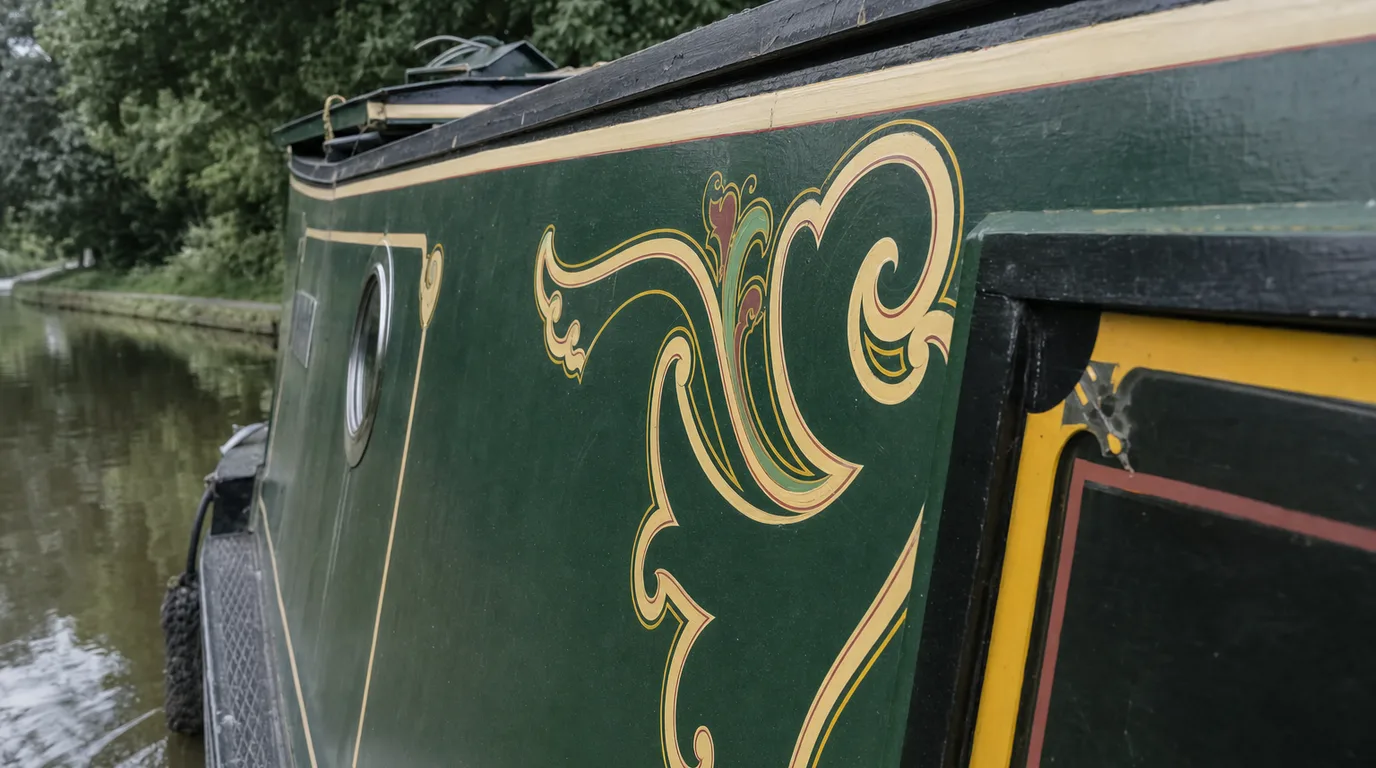
It's a distinct craft from the decorative roses and castles painting that often sits alongside it, a boat might be decorated by one specialist and lettered by another. The convention is a serif letterform with a hard drop shadow and a contrasting outline, usually cream lettering shaded to one side, set against a bottle-green or oxblood cabin side. That shading isn't decoration for its own sake, it's what makes a name legible across the width of a lock or from the far bank in flat canal light. There's no single "canal boat font"; a good signwriter draws the letters by hand and spaces them optically to fit the panel, rather than setting them from a typeface. A boat carries its name on both cabin sides and again across the stern, alongside the licensed registration number the Canal & River Trust requires.
Lettering is the part of making her yours with a bill attached. Before you ring a painter, read what narrowboat signwriting costs.
What a good job looks like.
Look at the spacing before the letterforms. A skilled signwriter adjusts the gaps by eye so the name looks even, which means the space between an A and a V is tighter than between two straight letters. Check that the outline and shadow are consistent in width and that the edges are crisp, without wobble. The painter will usually mark out the layout first, sometimes by pricking a paper pattern and dusting it onto the paint, then fill the letters in layers of enamel. Ask to see recent work on boats, ideally in daylight, and ask which paints are used, since the finish is meant to last through years of weather and the odd bump from a lock wall.
Before you book a painter.
Decide the exact wording first. A long name forces smaller letters, so test it against the space on the cabin side and the curve of the stern, and say whether the boat's index number should be lettered at the same time. Have the cabin side painted before the lettering goes on, because fresh lettering should not be rubbed down or repainted around. Once it is finished, allow the paint time to cure before washing, and avoid abrasive polish over the letters. A name painted by hand can be touched up later without a visible join, which is one reason boaters choose it over cut vinyl. The guide to canal boat signwriting sets paint and vinyl side by side and explains how to find a specialist.