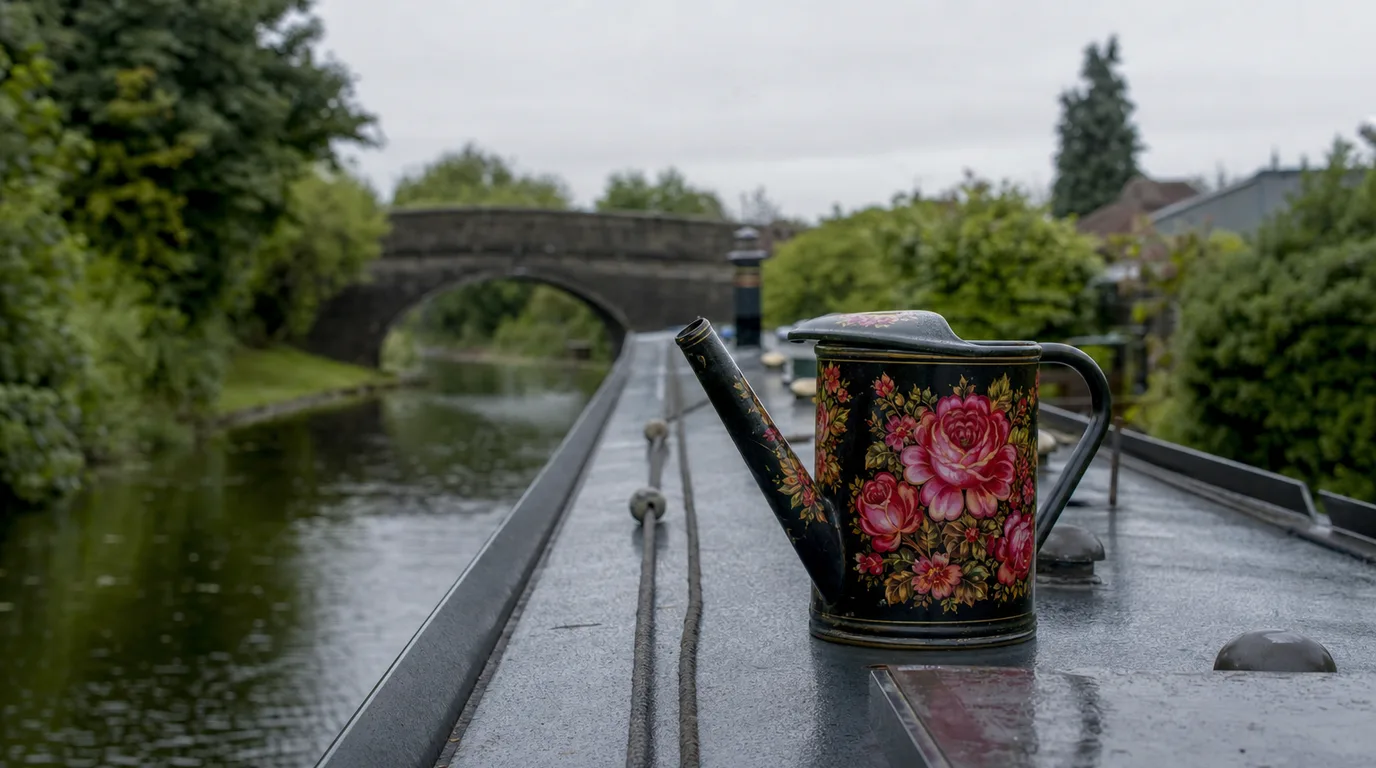
You'll find it on cabin doors and panels, on the tiller, and most famously on the Buckby can, the painted water can once carried on a working boat's roof. The Canal & River Trust describes it as "the colourful canal folk art that was used to decorate working narrowboats in the 19th century", and records that "No-one knows exactly where the Roses & Castles movement originated from" (Canal & River Trust, roses and castles canal folk art). It spread boat to boat and painter to painter rather than being taught from a book, and it covered far more than the hull: by the Trust's account "the drinking can, the horse's harness, doors, fitted furniture, lamps, anything and everything". The palette stays deliberately narrow: deep bottle green, oxblood red and black grounds, with roses picked out in bright reds, pinks, yellows and white, hard-wearing colours built to survive a working life on the cut. The tradition still lives, hand-painted by canal boat painters - a related craft to signwriting rather than the same one: see what narrowboat signwriting is.
Painting a boat is one of the ways she stops being anonymous, which is what making her yours is about. The roses and castles guide goes further into the palette, the painted objects, and the painters still taking commissions.
How the painting is built.
Look closely at a painted rose and you will see it is made from a few quick, deliberate strokes. Painters lay down a base colour, add a lighter highlight on one side and a dark accent in the centre or underneath, so a flat dab becomes a petal. Leaves and small flowers fill the gaps, and the castle usually sits on a lake or island with a bridge, trees and distant hills. The work is traditionally done in enamel over a dark ground and then varnished, so it needs a steady hand and confident brushwork. Because the design is repeated so often, the quality shows in the details: even strokes, crisp edges and a balanced layout.
Buying and caring for a piece.
If you want the real thing, ask who painted it, what paint and varnish were used and whether it is meant for outdoor use. A hand-painted Buckby can, stool or panel from a working painter differs from a mass-produced item with a printed pattern, and the painter should be happy to say which one yours is. For something displayed indoors, keep it out of direct sun and damp and wipe it with a soft cloth, as abrasive cleaners dull the varnish. On the boat itself, a painted can that sits on the roof will weather, and a fresh coat of varnish every so often keeps it going. To see how traditional painted ware compares with portraits and printed names for the wall, read the guide to canal boat art.