Made to orderFree UK deliveryArrives in 4 to 9 working days

Narrowboat Gifts

Your basket (0)

Work a canal lock, step by step

Pick going up or going down, then step through the lock. After each step you see what the gates, paddles and water are doing.

Take her through, one step at a time

Pick a direction, then step through. After each step you see what the gates, paddles and water are doing.

Going up: all 9 steps
  1. Step 1 of 9. Drop a crew member off before the lock to see whether it is full or empty. Here it is full, so moor below it, far enough back to keep out of the current while it empties. (Handbook page 18)

    Water in the lock
    level with the upper canal
    Top gates
    shut
    Bottom gates
    shut
    Top paddles
    down (shut)
    Bottom paddles
    down (shut)
    The boat
    below the lock
  2. Step 2 of 9. Look for a boat waiting to come down, or on its way. If there is one, let it use the lock first: that saves water. Here there is none. (Handbook page 18)

    Water in the lock
    level with the upper canal
    Top gates
    shut
    Bottom gates
    shut
    Top paddles
    down (shut)
    Bottom paddles
    down (shut)
    The boat
    below the lock
  3. Step 3 of 9. Check the paddles at the top of the lock are fully down. Then empty the lock by slowly raising the bottom gate paddles. (Handbook page 18)

    Water in the lock
    falling
    Top gates
    shut
    Bottom gates
    shut
    Top paddles
    down (shut)
    Bottom paddles
    up (water flowing)
    The boat
    below the lock
  4. Step 4 of 9. When the water inside is level with yours, open the bottom gates and steer the boat in. (Handbook page 18)

    Water in the lock
    level with the lower canal
    Top gates
    shut
    Bottom gates
    open
    Top paddles
    down (shut)
    Bottom paddles
    up (water flowing)
    The boat
    in the lock
  5. Step 5 of 9. Close the bottom gates and lower the bottom paddles. (Handbook page 18)

    Water in the lock
    level with the lower canal
    Top gates
    shut
    Bottom gates
    shut
    Top paddles
    down (shut)
    Bottom paddles
    down (shut)
    The boat
    in the lock
  6. Step 6 of 9. Fill the lock. If there are ground paddles by the top gate, open those first and wait until the lock is half full before the gate paddles. If there are only gate paddles, open them very slowly, a little at a time. (Handbook page 18)

    Water in the lock
    rising
    Top gates
    shut
    Bottom gates
    shut
    Top paddles
    up (water flowing)
    Bottom paddles
    down (shut)
    The boat
    in the lock
  7. Step 7 of 9. Keep the boat steady as the water rises: ropes looped round the bollards in a wide lock (do not tie up), or the engine in a narrow lock. (Handbook page 19)

    Water in the lock
    rising
    Top gates
    shut
    Bottom gates
    shut
    Top paddles
    up (water flowing)
    Bottom paddles
    down (shut)
    The boat
    in the lock
  8. Step 8 of 9. When the lock is full, open the top gates and move the boat out. (Handbook page 19)

    Water in the lock
    level with the upper canal
    Top gates
    open
    Bottom gates
    shut
    Top paddles
    up (water flowing)
    Bottom paddles
    down (shut)
    The boat
    above the lock
  9. Step 9 of 9. Lower the paddles and close the gates behind you, unless a boat coming towards you wants the lock. (Handbook page 19)

    Water in the lock
    level with the upper canal
    Top gates
    shut
    Bottom gates
    shut
    Top paddles
    down (shut)
    Bottom paddles
    down (shut)
    The boat
    above the lock
Going down: all 8 steps
  1. Step 1 of 8. Drop a crew member off to see whether the lock is full or empty. Here it is empty, so moor up above it while it is made ready. (Handbook page 20)

    Water in the lock
    level with the lower canal
    Top gates
    shut
    Bottom gates
    shut
    Top paddles
    down (shut)
    Bottom paddles
    down (shut)
    The boat
    above the lock
  2. Step 2 of 8. Look for a boat waiting to come up, or on its way. If there is one, let it use the lock first: that saves water. Here there is none. (Handbook page 20)

    Water in the lock
    level with the lower canal
    Top gates
    shut
    Bottom gates
    shut
    Top paddles
    down (shut)
    Bottom paddles
    down (shut)
    The boat
    above the lock
  3. Step 3 of 8. Check the bottom gates and paddles are closed. Then fill the lock by opening the paddles at the top end, the end nearest your boat. (Handbook page 20)

    Water in the lock
    rising
    Top gates
    shut
    Bottom gates
    shut
    Top paddles
    up (water flowing)
    Bottom paddles
    down (shut)
    The boat
    above the lock
  4. Step 4 of 8. When the lock is full, open the top gate and steer in. Keep the back of the boat well forward of the cill, the ledge under the top gates. The Handbook says cills stick out by up to 1.5 m (5 ft). (Handbook page 20)

    Water in the lock
    level with the upper canal
    Top gates
    open
    Bottom gates
    shut
    Top paddles
    up (water flowing)
    Bottom paddles
    down (shut)
    The boat
    in the lock
  5. Step 5 of 8. Close the top gates and lower the top paddles. (Handbook page 20)

    Water in the lock
    level with the upper canal
    Top gates
    shut
    Bottom gates
    shut
    Top paddles
    down (shut)
    Bottom paddles
    down (shut)
    The boat
    in the lock
  6. Step 6 of 8. Open the paddles at the bottom gate, in front of the boat, to empty the lock. Use the engine or ropes to keep the boat as still as you can. (Handbook page 20)

    Water in the lock
    falling
    Top gates
    shut
    Bottom gates
    shut
    Top paddles
    down (shut)
    Bottom paddles
    up (water flowing)
    The boat
    in the lock
  7. Step 7 of 8. When the levels are equal, open the bottom gates and take the boat out. (Handbook page 20)

    Water in the lock
    level with the lower canal
    Top gates
    shut
    Bottom gates
    open
    Top paddles
    down (shut)
    Bottom paddles
    up (water flowing)
    The boat
    below the lock
  8. Step 8 of 8. Close the gates and lower the paddles before you move on, unless a boat coming the other way wants the lock. (Handbook page 20)

    Water in the lock
    level with the lower canal
    Top gates
    shut
    Bottom gates
    shut
    Top paddles
    down (shut)
    Bottom paddles
    down (shut)
    The boat
    below the lock

Steps from the Canal & River Trust's Boater's Handbook, pages 18 to 20, in our words. Always follow the signs and instructions at the lock itself.

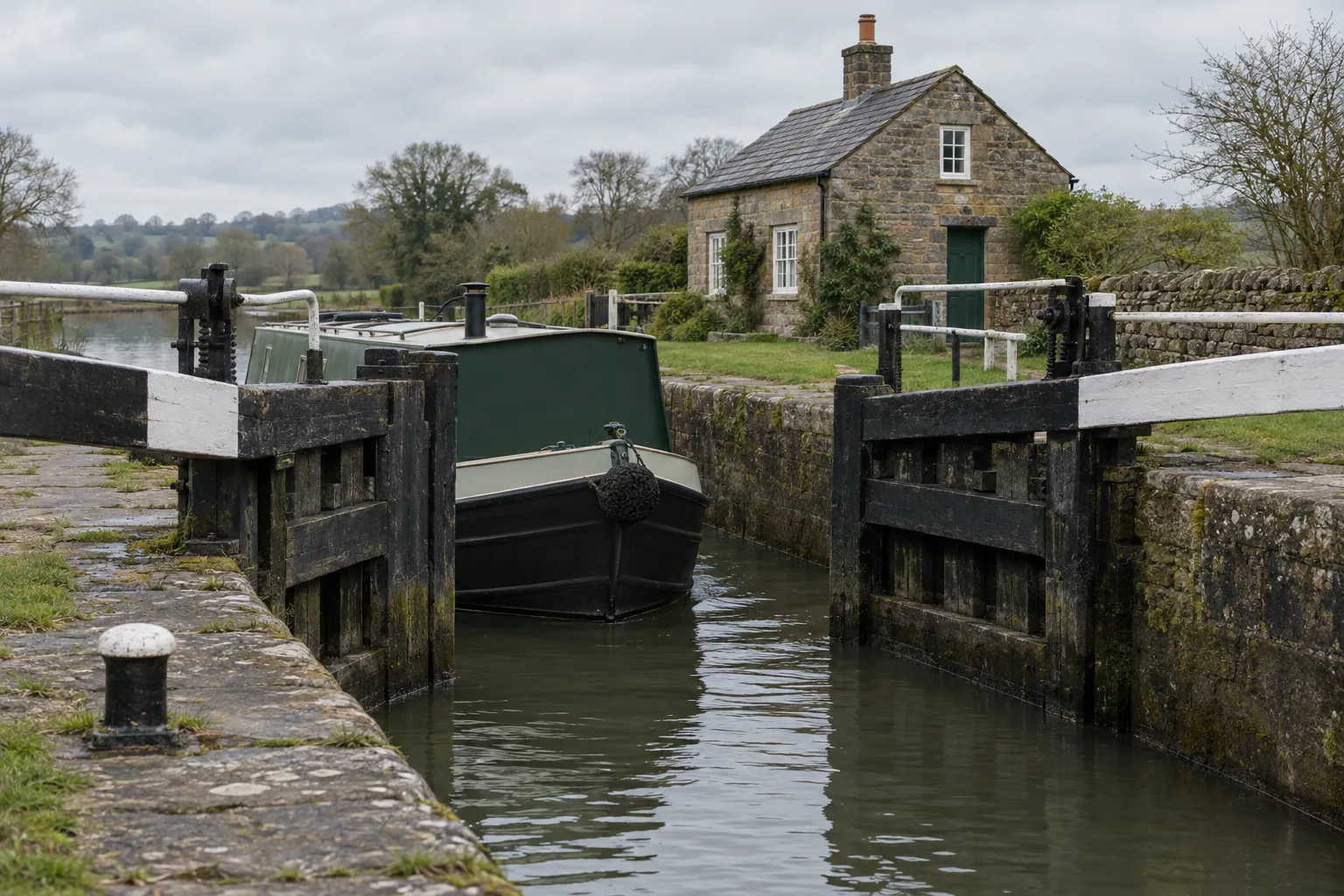
The bow of a green narrowboat nosing between open lock gates, a stone lock cottage behind
Gates open only when the water on both sides is level.

How a lock works

A lock is a chamber with gates at each end. Let water in and the boat rises to the higher canal. Let it out and the boat drops to the lower one. Paddles are the small sluices that let the water through, and you wind them up and down with a windlass.

The Canal & River Trust has a handy picture for it: think of the lock as a bath. The top paddles are the taps and the bottom paddles are the plughole. Never run the taps with the plug out, or you waste water and the lock never fills.

The two rules behind every step

First, never open a set of gates until the water is level on both sides. Second, never have the top and bottom paddles up together. Every step in the tool keeps both rules, and you can watch them hold.
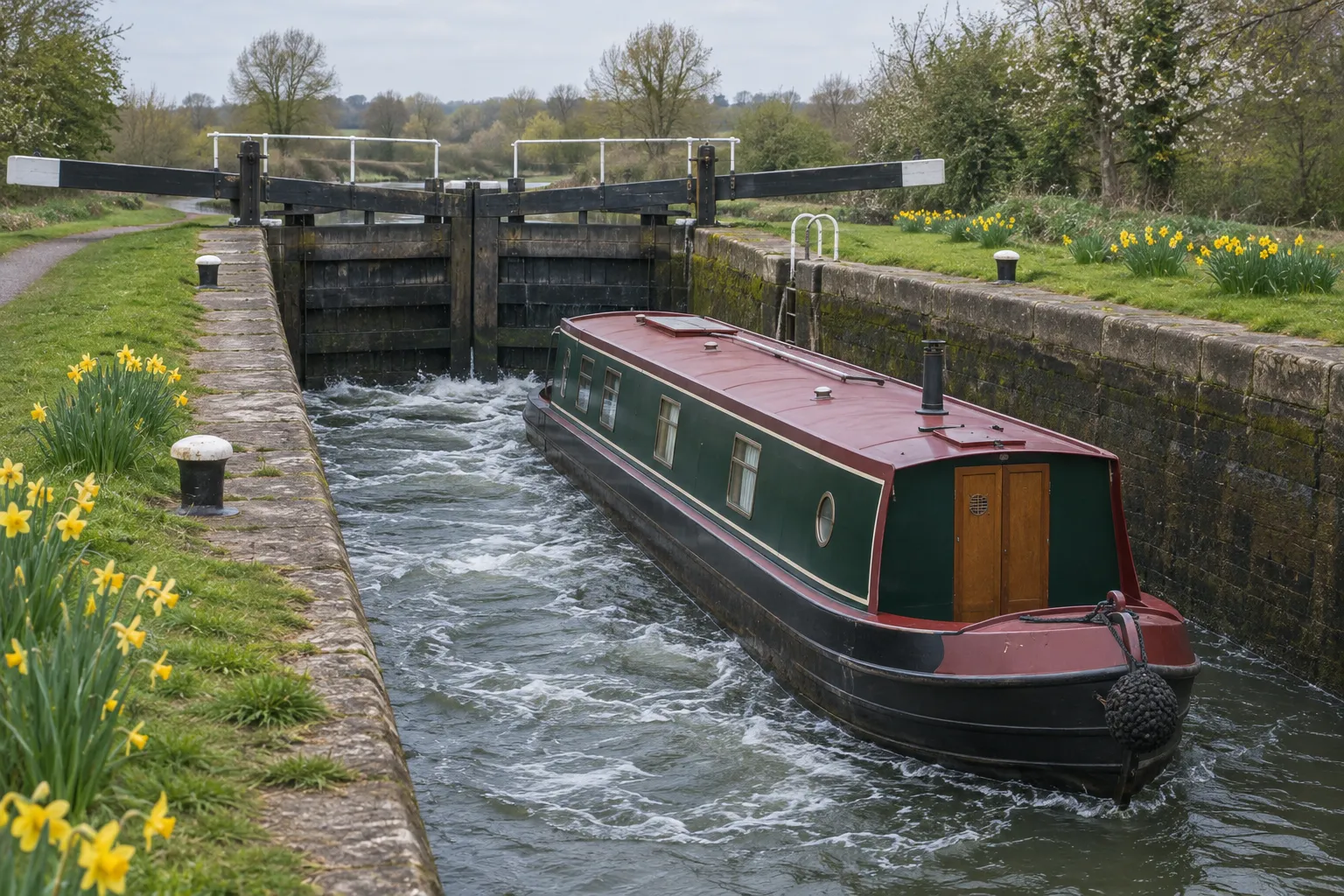
A narrowboat rising in a lock as water churns through the gates, daffodils on the lockside
Going up: the water comes in from the top end.

Stay safe

Going down, keep the back of the boat well forward of the cill, the stone ledge under the top gates. The Handbook says cills stick out by up to 1.5 m (5 ft) and only show as the lock empties. If the boat catches on anything, close all the paddles at once, then work out how to get her level again.

Take your time, keep someone competent aboard, and always follow the signs at the lock. For the full picture, read how canal locks work, then test yourself with the canal boat quiz.

Sources

Canal & River Trust, The Boater's Handbook (revision Spring 2022), pages 16 to 22, and its boating through locks page. Read on 30 October 2026. The steps are in our words.

Questions before you go

Which paddles do you open first going up?

Going up, the Handbook says that if there are ground paddles by the top gate, open those first, and wait until the lock is half full before opening the gate paddles.

What should I do if a boat is coming the other way?

Let them use the lock first if it is set for them. The Handbook says this saves water, and the lock is then ready for you.

What is a cill?

A ledge under the top gates. Going down, keep the back of the boat forward of it: the Handbook says cills stick out by up to 1.5 m (5 ft).